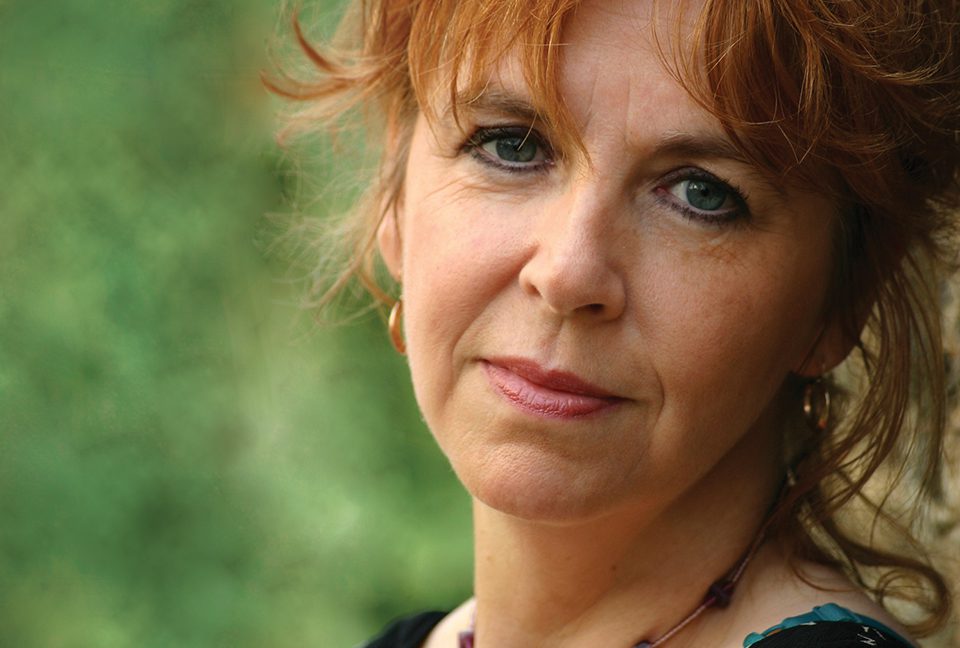
Carol Birch is a natural-born writer; she has the ability to bring stories and characters to life in front of your eyes. Her evocative style sweeps you along and ensures that you keep turning the pages. Birch found instant success as a writer with her first novel, Life in the Palace, going on to win the David Higham Award for the Best First Novel of the Year. Her writing career continued to go from strength to strength with The Fog Line winning the prestigious Geoffrey Faber Memorial Prize.
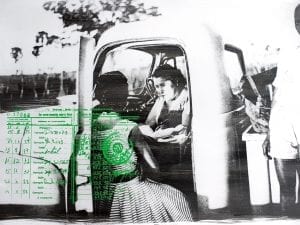
Carol Birch’s new novel does not disappoint. Scapegallows, is a skilfully woven fictional tale about the real-life Margaret Catchpole, a historical figure who escaped the gallows not once but twice, all in the pursuit of love. The story sweeps you from the dingy backstreets of 1700s Ipswich to the wide-open landscape of Australia. It tells the history of Margaret Catchpole in fascinating detail using old sources and original letters to paint the intricacies of her personality beautifully.
The origin of the novel is an interesting one. The idea materialized while Carol Birch was on holiday in Suffolk. Her husband lived opposite Margaret Catchpole’s place of birth, as a child he was surrounded by her lingering myths and legends. The tales were so rich they became hard for Birch to ignore. “Margaret Catchpole was an incredible woman, but the history of her life ends when she was transported from London to Australia. I always wondered what became of her life. The legends and stories are so rich. How could I not write her story?”
As a novel based on historical figures, the writing process held a new dimension and carried with it new responsibilities. “With my past works, I felt that the writing process was more free, and I felt I had much more room to write creatively. It was quite different with Scapegallows, as Margaret Catchpole is a historical figure and I felt that I had a responsibility to stick to the facts presented before me in my research.” By no means did Birch shy away from the responsibilities that came with writing a novel inspired by a true story. As research began, it became evident that descendants still lived in Ipswich to this day. “The Cobbold family that Margaret worked for are still there, so I felt I had a definite responsibility towards them to record things as accurately as possible. It’s a part of their past too.”
Both the writing and research for the novel became an integral part of the author’s life. “The research was my favourite part. I loved it. The material before me was fascinating. The hardest part was trying not to go down an entirely different route because it was so rich with stories and characters.” The sense of duty Birch felt bringing Margaret Catchpole to life and creating a sense of the real person was something that came easily. “I was given access to all her letters by the Australian National Library, which was fascinating. I totally immersed myself within her character. Essentially, she was with me day and night for quite a long time, so I started to get a real sense of the woman Margaret Catchpole actually was. The letters are in her own words, which made it easier and it became very instinctual. To me, I felt like I was connecting with a real person.”
Birch made some very intentional decisions when presenting Margaret Catchpole’s story, with the element of reality having the utmost importance. “I did not want to create a fairytale, I wanted to explore the truth.” Although the truth was gruesome at times, the research provided Birch with a platform to showcase Margaret Catchpole. “Our penal code was extremely draconian. I read about children who were hung for stealing ribbons, it really was quite harrowing.” Although the realities of the past created a disturbing existence, Birch deftly stitches both fact and fiction to present us with a moral tale about a good simple girl led astray. This amazing journey is made all the more enthralling because Margaret Catchpole was a real woman.
Deborah Ellis